John Henry Newman
English theologian and leader of the Oxford Movement.

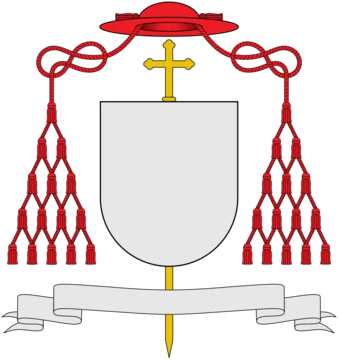
John Henry Newman (21 February 1801 – 11 August 1890) was an English Catholic theologian, academic, philosopher, historian, writer, and poet. He was an important figure in the religious history of England in the 19th century. Originally an evangelical academic at the University of Oxford and priest in the Church of England, Newman was drawn to the high church tradition of Anglicanism. He became one of the more notable leaders of the Oxford Movement, an influential group of Anglicans who wished to restore to the Church of England many Catholic beliefs and liturgical rituals practiced before the English Reformation. After publishing his Tract 90 in 1841, he later wrote: 'I was on my death-bed, as regards my membership with the Anglican Church.' In 1845, Newman resigned his teaching post at Oxford, left the Church of England and was received into the Catholic Church. He was quickly ordained as a priest and continued as an influential religious leader, based in Birmingham. In 1879, he was created a cardinal by Pope Leo XIII in recognition of his services to the cause of the Catholic Church in England. He was instrumental in the founding of the Catholic University of Ireland in 1854, which later became University College Dublin. Newman's canonization was approved by Pope Francis and took place on 13 October 2019. He was proclaimed a Doctor of the Church by Pope Leo XIV in 2025 and was also named co-patron of Catholic education, joining Saint Thomas Aquinas.
- born
- 21 February 1801
- died
- 11 August 1890
- field
- Theology, philosophy, history, literature
- nationality
- English
- known_for
- Oxford Movement, Essay on the Development of Christian Doctrine, Apologia Pro Vi
Verified Timeline
Lore & Background
Newman was born on 21 February 1801 in the City of London, the eldest of a family of three sons and three daughters. His father, John Newman, was a banker with Ramsbottom, Newman and Company in Lombard Street. His mother, Jemima (née Fourdrinier), was descended from a notable family of Huguenot refugees in England. At the age of seven Newman was sent to Great Ealing School conducted by George Nicholas. There George Huxley taught mathematics, and Walter Mayers taught classics. Aged 14, he read sceptical works by Thomas Paine, David Hume and perhaps Voltaire. At the age of 15, during his last year at school, Newman converted to Evangelical Christianity, an incident of which he wrote in his Apologia that it was 'more certain than that I have hands or feet'. Almost at the same time (March 1816) the bank Ramsbottom, Newman and Co. crashed. Mayers, who had himself undergone a conversion in 1814, lent Newman books from the English Calvinist tradition. Newman was sent shortly to Trinity College, Oxford, where he studied widely. He graduated as a BA 'under the line' (with lower second class honours in Classics, and having failed classification in the Mathematical Papers). He was elected a fellow at Oriel College on 12 April 1822. On 13 June 1824, Newman was made an Anglican deacon at Christ Church Cathedral, Oxford. On Trinity Sunday, 29 May 1825, he was ordained a priest at Christ Church Cathedral by the Bishop of Oxford, Edward Legge. He became, at Pusey's suggestion, curate of St Clement's Church, Oxford. In 1826, Newman returned as a tutor to Oriel, and the same year Richard Hurrell Froude was elected fellow there. In 1828, Newman was appointed vicar of St Mary's University Church, to which the benefice of Littlemore was attached. In December 1832, Newman accompanied Archdeacon Robert Froude and his son Hurrell on a tour in southern Europe. On board the mail steamship Hermes they visited Gibraltar, Malta, the Ionian Islands and, subsequently, Sicily, Naples and Rome, where Newman made the acquaintance of Nicholas Wiseman. In a letter home he described Rome as 'the most wonderful place on Earth', but the Roman Catholic Church as 'polytheistic, degrading and idolatrous'. During this tour, Newman wrote most of the short poems which a year later were printed in the Lyra Apostolica. From Rome, instead of accompanying the Froudes home in April, Newman returned to Sicily alone. He fell dangerously ill with gastric or typhoid fever at Leonforte, but recovered, with the conviction that God still had work for him to do in England. In June 1833 he left Palermo for Marseille in an orange boat, which was becalmed in the Strait of Bonifacio. Here, Newman wrote the verses 'Lead, Kindly Light' which later became popular as a hymn. Newman was at home again in Oxford on 9 July 1833 and, on 14 July, Keble preached at St Mary's an assize sermon on 'National Apostasy', which Newman afterwards regarded as the inauguration of the Oxford Movement.
Reader's Guide
John Henry Newman's significance lies in his pivotal role in the Oxford Movement and his lasting influence on Catholic theology. After publishing his Tract 90 in 1841, Newman later wrote: 'I was on my death-bed, as regards my membership with the Anglican Church.' In 1845, Newman resigned his teaching post at Oxford, left the Church of England and was received into the Catholic Church. He was quickly ordained as a priest and continued as an influential religious leader, based in Birmingham. In 1879, he was created a cardinal by Pope Leo XIII in recognition of his services to the cause of the Catholic Church in England. He was instrumental in the founding of the Catholic University of Ireland in 1854, which later became University College Dublin. Newman was also a prominent writer: his major writings include the Tracts for the Times (1833–1841), his Essay on the Development of Christian Doctrine (1845), his autobiography Apologia Pro Vita Sua (1864), and the Grammar of Assent (1870). In particular, his theory on the development of doctrine has been highly influential on subsequent Catholic theology. Newman's canonization was approved by Pope Francis and took place on 13 October 2019. He was proclaimed a Doctor of the Church by Pope Leo XIV in 2025 and was also named co-patron of Catholic education, joining Saint Thomas Aquinas.
Did You Know?
- At age 15, Newman converted to Evangelical Christianity, an event he later called 'more certain than that I have hands or feet'.
- In June 1833, while becalmed in the Strait of Bonifacio, Newman wrote the verses 'Lead, Kindly Light', which later became a popular hymn.
- Newman described Rome as 'the most wonderful place on Earth' but called the Roman Catholic Church 'polytheistic, degrading and idolatrous' during his 1833 visit.
- He was proclaimed a Doctor of the Church by Pope Leo XIV in 2025 and named co-patron of Catholic education, joining Saint Thomas Aquinas.
- Newman's father's bank, Ramsbottom, Newman and Co., crashed in March 1816, though it paid its creditors.
The Long Road from Evangelicalism to Rome
Newman's spiritual trajectory represents one of the most dramatic intellectual conversions in nineteenth-century religious history. Beginning as a fervent evangelical Calvinist at fifteen, he gradually drifted toward the high church wing of Anglicanism, where he became a leading voice of the Oxford Movement—a circle of Anglicans determined to recover Catholic liturgical practices and doctrines that predated the English Reformation. His 1841 publication of Tract 90 proved a watershed; in his own later reflection, he described himself as being on his death-bed with respect to his Anglican membership. Two years later, in 1845, he formally resigned his Oxford teaching position, severed his ties with the Church of England, and was received into Roman Catholicism. He was swiftly ordained a Catholic priest and established himself in Birmingham, where he would spend the remainder of his life as a major religious figure. The arc from evangelical individualism to institutional Catholicism was, in his own assessment, a movement away from what he came to see as religious subjectivism toward a tradition that preserved revealed truth through the Church itself.
A Writer Who Reshaped Catholic Theology
Across five decades, Newman produced a body of writing that reshaped Catholic theological discourse. His Tracts for the Times, published between 1833 and 1841, articulated the Oxford Movement's vision for restoring pre-Reformation practices within Anglicanism. After his conversion, he turned his formidable intellect to broader questions of faith and reason. The Essay on the Development of Christian Doctrine (1845) argued that Catholic teaching had not been static but had organically unfolded over centuries—a framework that would prove extraordinarily influential on subsequent Catholic theology. His 1864 autobiography, Apologia Pro Vita Sua, offered a candid account of his spiritual evolution and became a landmark of religious memoir. The Grammar of Assent (1870) tackled the epistemological question of how human beings come to believe, bridging philosophy and theology in a way that continues to provoke discussion. Together, these works established Newman not merely as a convert but as a thinker whose ideas outlasted any single denomination.
Institutional Legacy and the Path to Sainthood
Newman's impact extended well beyond the page into the concrete structures of Catholic life in Britain and Ireland. In 1854, he played a pivotal role in establishing the Catholic University of Ireland, an institution that would later evolve into University College Dublin. His commitment to Catholic education was so central to his identity that in 2025, Pope Leo XIV named him co-patron of Catholic education alongside Saint Thomas Aquinas. In 1879, Pope Leo XIII elevated him to the rank of cardinal in formal recognition of his decades of service to the Catholic cause in England. His posthumous recognition continued to grow: Pope Francis approved his canonization, and on 13 October 2019, Newman was formally declared a saint. The 2025 proclamation of him as a Doctor of the Church by Pope Leo XIV represented the highest level of theological honor the Church can bestow, cementing his status as a permanent voice in Catholic intellectual tradition and ensuring his writings remain a reference point for theologians worldwide.
A Boy of Bloomsbury and the Seeds of Doubt
Born in the City of London on 21 February 1801, Newman was the eldest of six children in a family of modest means. His father, John Newman, worked as a banker at Ramsbottom, Newman and Company on Lombard Street, while his mother, Jemima Fourdrinier, carried the lineage of Huguenot refugees who had fled to England generations earlier. The family resided in Bloomsbury and maintained a country retreat near Richmond. At seven, young Newman was sent to Great Ealing School, where he devoured the novels of Walter Scott and Robert Southey rather than participating in games. By fourteen, he had already encountered the sceptical writings of Paine, Hume, and possibly Voltaire. The defining moment came at fifteen, when he experienced what he later called a conversion to Evangelical Christianity so certain he likened it to knowing he had hands and feet. That same year, his father's bank collapsed, forcing the family into financial difficulty. The young Newman absorbed Calvinist theology through books lent by his teacher Walter Mayers, and for a time held the conviction that the Pope was the antichrist.
Frequently Asked Questions
Who is John Henry Newman?
He was an English theologian, philosopher, and writer (1801–1890) who rose from evangelical Anglican academic at Oxford to become a Catholic cardinal and, ultimately, a canonized saint.
What was Newman's role as a cardinal?
Created a cardinal in 1879, he served as a Catholic priest and intellectual leader in England, writing extensively on doctrine and defending the Catholic faith against Protestant critics.
How did Newman convert to Catholicism?
After spearheading the Oxford Movement to recover Catholic ritual and belief within the Church of England, he personally entered the Roman Catholic Church in 1845 and was ordained a priest shortly thereafter.
Why is Newman important to Catholic history?
His major works, especially the Essay on the Development of Christian Doctrine and Apologia Pro Vita Sua, reshaped how 19th-century readers understood the interplay of tradition, reason, and faith.
How is Newman remembered today?
Canonized as a saint in 2019 and declared a Doctor of the Church, he remains one of the most widely read English-language theologians in both Catholic and secular academic circles.
More in Catholic Popes & Cardinals 1-19
Spotted an error? Know more?
This is a living reference — every entry is fact-audited, and reader corrections feed straight into our audit queue. Suggest an edit · See this site's audit record