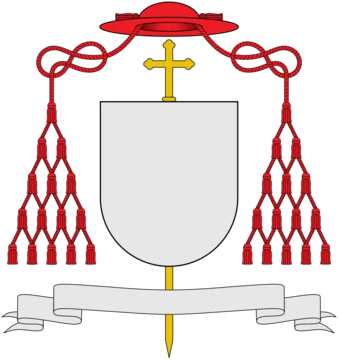
Pope Benedict XV
Pope during World War I, sought peace and humanitarian relief.

His pontificate was largely focused on World War I and its political, social, and humanitarian consequences in Europe, which he labeled 'the suicide of civilized Europe.' He declared the neutrality of the Holy See and attempted to mediate peace in 1917, though both sides rejected his initiatives.
- died
- 22 January 1922, Rome, Italy
- field
- Pope, head of the Catholic Church
- nationality
- Italian
- known_for
- Focus on World War I, humanitarian efforts, promulgation of the 1917 Code of Canon Law, revitalization of Catholic missions
Lore & Background
In 1907, he was appointed Archbishop of Bologna and consecrated by Pope Pius X. He became a cardinal on 25 May 1914.
Reader's Guide
Pope Benedict XV's significance lies in his leadership during World War I, a period of immense upheaval. He declared the Holy See's neutrality and attempted to mediate peace, but both sides rejected his initiatives. After diplomatic failures, he focused on humanitarian efforts, including attending prisoners of war, exchanging wounded soldiers, and delivering food to needy populations. He promulgated the Code of Canon Law in 1917, which stimulated religious life, and revitalized Catholic missions worldwide with the encyclical Maximum illud. After the war, he repaired relations with France, which re-established ties with the Vatican in 1921, and permitted Catholic politicians to participate in Italian politics. He died on 22 January 1922 after battling pneumonia.
Did You Know?
- He labeled World War I 'the suicide of civilized Europe'.
- He personally consecrated Eugenio Pacelli (future Pope Pius XII) as Archbishop on 13 May 1917.
- He approved the Feast of Mary, Mediatrix of all Graces for certain dioceses in 1921.
The War Pope and the Failure of Diplomacy
Pope Benedict XV's seven-year pontificate was defined by a single, overwhelming catastrophe. Elected by the College of Cardinals in 1914 at the relatively young age of fifty-nine, he found himself confronting what he branded "the suicide of civilized Europe." He declared the Holy See neutral and, from that vantage point, launched peace mediation efforts in both 1916 and 1917. Both initiatives were flatly rejected: German Protestants regarded any "Papal Peace" as an insult, and French politician Georges Clemenceau dismissed the Vatican's overtures as anti-French. With diplomacy having failed, Benedict redirected his energy toward humanitarian relief—caring for prisoners of war, facilitating the exchange of wounded soldiers, and coordinating food deliveries to populations starving across Europe. Battling pneumonia from the start of January, he died on 22 January 1922 and was buried in the grottoes of Saint Peter's Basilica.
A Noble Youth Reluctantly Drawn to the Clergy
The premature birth left him with a persistent limp, and he completed much of his early schooling at home. His father firmly rejected his early wish to become a priest, insisting on a legal career instead. Giacomo complied, earning a doctorate in Law at the University of Genoa on 2 August 1875. Only then, having reached legal age, did his father grudgingly allow him to pursue theological studies—but in Rome, not Genoa, to spare him a provincial clerical life.
Shaping the Church's Legal and Missionary Framework
Beyond the shadow of war, Benedict XV left a structural mark on the Catholic Church that endures to this day. The new code is widely credited with energizing religious life and institutional activity throughout the global Church. He also elevated Gasparri to Cardinal Secretary of State and personally consecrated Pacelli as Archbishop on 13 May 1917, shaping the leadership that would guide the Church through the interwar years. Equally significant was his pastoral vision for the Church's outward reach. The devastation of World War I had crippled Catholic missionary work worldwide, and Benedict responded with the encyclical Maximum illud, urging Catholics everywhere to take active part in evangelization.
Mending Fractured Diplomatic Ties
Benedict XV's pontificate also reshaped the Church's political standing in Europe. His most consequential diplomatic achievement came after the war, when he worked to repair the deeply strained relationship between the Holy See and France. Those efforts bore fruit in 1921, when France re-established formal relations with the Vatican—a milestone after decades of bitter separation. These diplomatic and political moves, combined with his humanitarian interventions during the war, positioned Benedict XV as a pope who sought to reinsert the Church into the fabric of modern European society even as the old order crumbled around him.
Frequently Asked Questions
Who is Pope Benedict XV?
He was the head of the Catholic Church from 1914 until early 1922, born Giacomo Paolo Giovanni Battista della Chiesa in Pegli, Genoa, Italy. His papacy is most closely tied to the devastation of the First World War and the Church's humanitarian response to it.
What did Pope Benedict XV do during World War I?
He declared the Holy See strictly neutral and pressed both the Allied and Central Powers to accept a diplomatic peace settlement in 1917, though neither side agreed to his terms. Beyond diplomacy, he organized relief efforts for civilians and prisoners suffering under the war.
What is the 1917 Code of Canon Law and how does it connect to Benedict XV?
Benedict XV promulgated the first full, unified codification of the Church's internal legal rules, gathering centuries of scattered decrees into a single organized document. It still serves as the structural backbone of Catholic governance today.
How does Pope Benedict XV's story end?
He died in Rome on 22 January 1922, only weeks after turning 67, closing out a pontificate defined by the trauma of the Great War. His successor, Benedict XVI, later chose the same regnal number in his honor.
Why is Pope Benedict XV remembered in Catholic history?
He is recalled as the pope who tried to halt a world war through diplomacy and mercy, famously calling the conflict 'the suicide of civilized Europe.' His reign also produced the first comprehensive canon law code and a renewed push for Catholic missionary work around the globe.
More in Catholic Popes & Cardinals 1-19
Related in Catholic Popes & Cardinals
Links follow this subject's own source article.
Spotted an error? Know more?
This is a living reference — every entry is fact-audited, and reader corrections feed straight into our audit queue. Suggest an edit · See this site's audit record