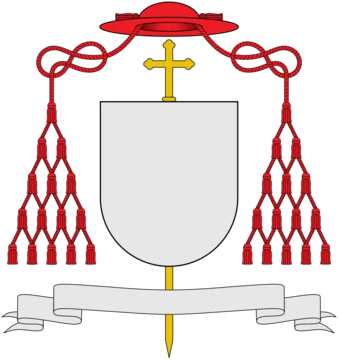
Pope Benedict XVI
Pope who resigned, theologian, defender of traditional Catholic doctrine.

He was the first pope to relinquish the office since Gregory XII quit the papacy in 1415 to help end the Western Schism. Benedict resigned at the age of 85, citing declining health due to old age. He chose to be known as "Pope emeritus" upon his resignation, and he retained this title until his death in December 2022.
- born
- 16 April 1927 (baptized 17 April 1927)
Verified Timeline
Lore & Background
On the morning of 11 February 2013—the World Day of the Sick, a Vatican holy day—Pope Benedict XVI announced his intention to resign the Petrine Ministry effective 28 February 2013. The announcement was made at the Apostolic Palace, in the Sala del Concistoro, at a public ordinary consistory of cardinals that was being held to announce the date of the canonisation of 800 Catholic martyrs. Speaking in Latin, Benedict told mostly surprised cardinals and other attendees that he had made "a decision of great importance for the life of the church." Critically, he noted that the decision was made 'in full freedom'—that the resignation be voluntary is required by canon law. He cited his deteriorating strength due to old age and the physical and mental demands of the papacy. The news story was broken by journalist Giovanna Chirri, who understood Latin. Two days later, he presided over his final public mass: a service for Ash Wednesday that ended with congregants bursting into a "deafening standing ovation that lasted for minutes" while the pontiff departed St. Peter's Basilica. On 17 February 2013, Benedict, speaking in Spanish, requested prayers for himself and the new pope from the crowd in St. Peter's Square. Benedict XVI delivered his final Angelus on Sunday, 24 February. He told the gathered crowd, "Thank you for your affection. [I will take up a life of prayer and meditation] to be able to continue serving the church." The pope appeared for the last time in public during his regular Wednesday audience on 27 February 2013. By 16 February, 35,000 people had already registered to attend the audience. On the evening of 27 February there was a candlelight vigil to show support for Pope Benedict XVI at St. Peter's Square. On his final day as pope, Benedict held an audience with the college of Cardinals, and at 16:15 local time he boarded a helicopter and flew to Castel Gandolfo. At about 17:30, he addressed the masses from the balcony for the last time as pope. After this speech Benedict waited out the final hours of his papacy; at exactly 20:00 CET the see of Rome became vacant. The conclave to select his successor began on 12 March 2013 and on 13 March 2013 elected cardinal Jorge Mario Bergoglio, Archbishop of Buenos Aires, Argentina, who took the name of Francis. After his resignation, Benedict took up residence in the Papal Palace of Castel Gandolfo. The Swiss Guard's service at Castel Gandolfo ended with Benedict's resignation; the Vatican Gendarmerie became solely responsible for the former pope's personal security. Benedict moved permanently to Vatican City's Mater Ecclesiae on 2 May 2013, a monastery previously used by nuns for stays of up to several years. Benedict XVI lived in the monastery until his death 9 years later on 31 December 2022. He died there after having been ill for several days. After his funeral on 5 January 2023 in St. Peter's Square, he was buried in a tomb next to his predecessors underneath St. Peter's Basilica.
Reader's Guide
Pope Benedict XVI's significance lies in his resignation, which made him the first pope to relinquish the office since Gregory XII in 1415. All other popes in the modern era have held the position from election until death. Benedict resigned at age 85, citing declining health due to old age. He chose to be known as "Pope emeritus" upon his resignation, and he retained this title until his death in December 2022. According to Vatican spokesman Federico Lombardi, Benedict would not have the title of cardinal upon his retirement and would not be eligible to hold any office in the Roman Curia. On 26 February 2013, Father Lombardi stated that the pope's style and title after resignation are His Holiness Benedict XVI, Roman Pontiff Emeritus, or Pope Emeritus. In later years, Benedict expressed his desire to be known simply as "Father Benedict" in conversation. He continued to wear his distinctive white cassock, but now worn without the pellegrina, a traditional symbol of authority (Francis did wear the pellegrina, so this distinguished them when they were seen together). Instead of the red papal shoes, he wore a pair of brown shoes that he received during a state visit to Mexico. Cardinal Camerlengo Tarcisio Bertone defaced the Ring of the Fisherman by chiseling two deep cuts in the shape of a cross, rendering it unusable as a seal. Benedict wore in his retirement a regular ecclesiastical ring. After his resignation, a number of conspiracy theories started circulating. In one, Pope Benedict was accused of financial mismanagement, and thus the Vatican bank needed to be reformed. In 2012, confidential Vatican documents were leaked, creating issues for the pope of the day. While it is possible that financial or other issues contributed to his resignation, none of them were cited by Benedict as reasons for his own, 'full freedom' decision to resign. There have been conspiracy theories about the so-called St. Gallen Mafia, which is supposed a group of more theologically and politically liberal bishops and cardinals, and if they conspired to force his resignation or change the direction of Benedict's papacy. Such rumors were widely disbelieved, debunked and disproven. An uncertain number of people believe that the resignation of Benedict XVI was not valid, and that he therefore never resigned, that Pope Francis was an antipope and Benedict XVI still remained pope. Such a position is called "Benevacantism" (a portmanteau of "Benedict" and "sedevacantism"), "resignationism", or "Beneplenism". Supporters of this position assert that the phrasing or grammar of Benedict XVI's resignation statement, given in Latin, did not effectively remove him from office of the papacy. Benedict himself publicly rejected this theory. After Benedict's death, some former adherents to Benevacantism held to sedevacantism, while others considered Francis to be the pope.
Did You Know?
- Benedict XVI was the first pope to resign since Gregory XII quit the papacy in 1415 to help end the Western Schism.
- The news of his resignation was broken by journalist Giovanna Chirri, who understood Latin.
- On his final day as pope, Cardinal Camerlengo Tarcisio Bertone defaced the Ring of the Fisherman by chiseling two deep cuts in the shape of a cross.
- Benedict moved permanently to Vatican City's Mater Ecclesiae on 2 May 2013, a monastery previously used by nuns.
- After his death on 31 December 2022, he was buried in a tomb next to his predecessors underneath St. Peter's Basilica.
Frequently Asked Questions
Who is Pope Benedict XVI?
Benedict XVI, born Joseph Alois Ratzinger on 16 April 1927, served as head of the Catholic Church and sovereign of Vatican City from 2005 to 2013. He was a German philosopher and theologian who held the papal throne for roughly eight years before stepping down.
What are Pope Benedict XVI's powers and role?
As pope, he held supreme authority over the worldwide Catholic Church, acting as its spiritual leader and the sovereign head of the Vatican City State. In that capacity he could issue encyclicals, appoint cardinals, and set doctrinal direction for over a billion Catholics.
How does Pope Benedict XVI's story end?
In February 2013 he stunned the world by resigning the papacy, becoming the first pope to voluntarily step down since Gregory XII in the 15th century. After his resignation he retired to the Mater Ecclesiae monastery within Vatican City, where he lived out his remaining years as a retired pontiff.
Why is Pope Benedict XVI important?
His decision to resign broke a centuries-old pattern and reshaped how the Church views the papal office. Beyond that, his decades of theological writing and his firm defense of traditional Catholic doctrine made him one of the most influential thinkers in modern Catholicism.
What is Pope Benedict XVI best known for?
He is widely recognized as a leading 20th- and early-21st-century theologian who consistently defended traditional Catholic teaching against modernist reinterpretations. His papacy is also remembered for the landmark act of a pope choosing to resign rather than serve until death.
More in Catholic Popes & Cardinals 1-19
Related in Catholic Popes & Cardinals
Links follow this subject's own source article.
Spotted an error? Know more?
This is a living reference — every entry is fact-audited, and reader corrections feed straight into our audit queue. Suggest an edit · See this site's audit record