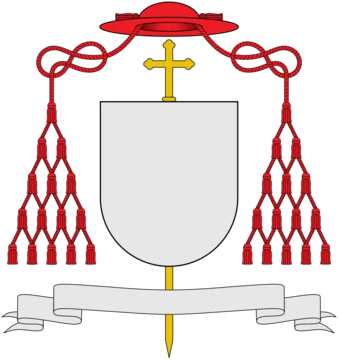
Pope Damasus I
Bishop of Rome for 23 days in 1048, nominated by Emperor Henry III.

Pope Damasus II (; died 9 August 1048, born Poppo von Brixen) was the Bishop of Rome and ruler of the Papal States from 17 July 1048 to his death on 9 August that same year. He was the second of the German pontiffs nominated by Emperor Henry III. A native of Bavaria, he was the third German to become pope and had one of the shortest papal reigns.
- known_for
- Second German pope nominated by Emperor Henry III; one of the shortest papal rei
Lore & Background
Born into an ancient Bavarian House of Babonen, Poppo was a younger son of Count Poppo II von Rott. He became the Bishop of Brixen in Tyrol in 1040, upon nomination by King Henry III, and was already consecrated by 16 January 1040. Poppo was also a key advisor to King Henry III of Germany and travelled with him to Italy for his imperial coronation in 1046. Upon the death of Clement II, envoys from Rome were sent to the emperor to ascertain who should be named pope. Henry named the bishop of Brixen, Poppo de' Curagnoni. While the envoys were away, the former pope Benedict IX reasserted himself and with the assistance of the disaffected Margrave Boniface III of Tuscany once again assumed the papacy. Henry ordered Boniface to escort Poppo to Rome, but Boniface declined, pointing out that the Romans had already enthroned Benedict. Enraged, the emperor ordered the margrave to depose Benedict or suffer the consequences. Poppo became pope in mid-July but died less than a month later, in Palestrina. Rumors circulated that he had been poisoned, allegedly by a man named Gerhard Brazutus, a friend of Benedict IX and a follower of Hildebrand. However, the source for this information is suspect. A modern conjecture is that he died of malaria. Pope Damasus II was buried in San Lorenzo fuori le Mura, according to Onuphrio Panvinio, the 16th century 'scriptor' in the Vatican Library. The sarcophagus in which Damasus' body had been placed, and which was moved at least twice, was large and 'adorned with reliefs representing a vineyard, with cupids as the wine gatherers.'
Reader's Guide
Pope Damasus II is significant as the second German pope nominated by Emperor Henry III, and for having one of the shortest papal reigns—only 23 days, from 17 July 1048 to 9 August 1048. His election followed the death of Clement II, when Roman envoys sought Henry's nomination. Henry chose Poppo, bishop of Brixen, over the Romans' preferred candidate, Halinard of Lyon. The former pope Benedict IX, with help from Margrave Boniface III of Tuscany, reclaimed the papacy during the envoys' absence. Henry forced Boniface to expel Benedict, and Poppo was enthroned at the Lateran on 17 July 1048. His brief pontificate ended with his death in Palestrina, possibly from malaria. He was buried in San Lorenzo fuori le Mura in a sarcophagus adorned with reliefs of a vineyard and cupids as wine gatherers.
Did You Know?
- Pope Damasus II reigned for only 23 days, from 17 July 1048 to 9 August 1048.
- He was the third German to become pope.
- His sarcophagus was adorned with reliefs of a vineyard and cupids as wine gatherers.
- A modern conjecture suggests he died of malaria.
- Rumors that he was poisoned by a friend of Benedict IX are considered suspect by the source.
Frequently Asked Questions
Who is Pope Damasus I?
Pope Damasus I (c. 305 – 11 December 384) served as Bishop of Rome from October 366 until his death. He is also commonly referred to as Damasus of Rome and is remembered as a key figure in early Western Church history.
What is Pope Damasus I most known for?
He is best recognized for presiding over the Council of Rome in 382, which produced a list of canonical scriptures whose formal authenticity remains debated among scholars. He also actively promoted the veneration of martyrs and worked to firm up orthodox doctrine during his tenure.
What was Pope Damasus I's connection to the Vulgate Bible?
Damasus I was a major patron of Jerome, encouraging and supporting his translation of the Scriptures into Latin. That project ultimately became the Vulgate, the standard Latin Bible for the Western Church for over a millennium.
Which heresies did Pope Damasus I oppose?
He took firm stands against both Apollinarianism and Macedonianism, using his authority to push back against teachings he saw as threats to orthodox Christology and Trinitarian belief.
How did Pope Damasus I's papacy end?
His final years were clouded by factional violence, rival claimants, and personal accusations, yet he remained in office until his death on 11 December 384. He died as the sitting Bishop of Rome, having never been deposed.
More in Catholic Popes & Cardinals 1-19
Spotted an error? Know more?
This is a living reference — every entry is fact-audited, and reader corrections feed straight into our audit queue. Suggest an edit · See this site's audit record